Showing posts with label loss of control. Show all posts

Monday, February 17, 2014

Make It Count Monday: Step Two & Sanity

Good evening, everyone! It's Monday! Did you make it count? We are still focusing on Step Two for the month of February, which reads: Came to believe that a power greater than ourselves could restore us to sanity. Last week, we talked about developing a relationship with a Higher Power

I thought we would focus on the concept of "sanity." 

To me, it means:


  1. Having a peace of mind
  2. Believing in the process of life
  3. Being out of active addiction
  4. Believing in myself
  5. Understanding that I am not in control
  6. Understanding that I don't have to be controlled. 
Working Step Two allowed me to see my side of the street and also Higher Power's side of the street. I can only control my part of the problems that life brings. It's a process, not an event. 

What does "sanity" mean to you?

Have a fantastic week. Stay safe, sane, and sober.

Sincerely, 


Tuesday, January 21, 2014

Topic Tuesday: Sex & Love Addiction


Like codependence, sex and love addiction is a process addiction. Sex and love are primitive concepts that are natural and normal. A person may be considered a “sex and love addict” if he or she uses sex, love, and/or relationships as tools to escape painful feelings or augment pleasure. These behaviors become addictive in nature: powerlessness and unmanageability spread throughout.  A sex and love addict may be a person who engages in:
  •        compulsive masturbation
  •         obsessive porn viewing
  •         anonymous sex
  •         emotional dependency on another
  •         obsessive fantasy

As a recovering sex and love addict, I can say that the process of uncovering all the behaviors I was powerless over was shocking and mind numbing. I had recognized early on that my life seemed somewhat unmanageable, but with new information I learned from my sponsor in CoDA and my therapist, I became willing to see how dysfunctional my life truly was.

I found help in the rooms of Sex and Love Addicts Anonymous. Here, I was able to sit amongst fellow sex and love addicts and it was as if they all had my life. I wasn’t unique. After my first meeting I sat down and took a 40 question self-assessment and my life changed forever and for the better. 

I got a clear picture of my life and my struggles. I also recognized that I could recover. I just had to do the work. I am grateful for the program of SLAA and CoDA. They helped save my life. I hope you find what you are needing in this moment.

Check out the fellowship of Sex and Love Addicts Anonymous.

Sincerely, 


Friday, January 17, 2014

Weekend Retreat


I began my recovery journey with the help of all the books by Pia Mellody. She is an expert on codependence, addiction, and recovery. In her book, The Intimacy Factor, Pia gives readers insight into dealing with relationships: what makes them and what breaks them.

I highly recommend this book if you are looking to understand relationship dynamics. Being in a relationship while in recovery can be very tricky if you don't have an understanding of the basics: boundaries, communication, expectations, and respect. Don't go it alone. Give this book a good read and take notes. My copy is highlighted. :)


In 2013, I saw one of the best movies on addiction, "Thanks for sharing". It is a phenomenal movie starring Hollywood heavy weights, Mark Ruffalo, Gwyneth Paltrow, and Tim Robbins. The movie shares the emotional and psychological ups and downs of several folks in recovery for sex addiction.

It shows how individuals in recovery groups can find the family that we often don't have before recovery. The movie is fun, funny, compassionate, and endearing. I love all the characters and storylines. Invite some friends over and give it a view!

Whatever you decide to do this week, do something fun, relaxing, and on the path of recovery.

Sincerely,


Tuesday, January 14, 2014

Topic Tuesday: Codependence


Codependence is a deeply rooted, compulsive behavior that is born out of a less than nurturing or abusive environment in childhood. A child’s emotional development may be stunted due to the lack of nurturance, love, guidance, support, and direction that his/her parents are supposed to impart on the child’s life.

As a result of growing up in this environment, a child develops into an adult who may display some or all of the characteristics outlined below. Codependents:
  •         may not be aware of how they feel.
  •         tend to fear and/or worry how others may respond to their feelings.
  •        are not aware of their needs and wants.
  •         have difficulty having fun.
  •         judge themselves and/or others harshly.
  •         are terrified of being left or abandoned
  •         over react to changes over which we do not have any control.
  •         are extremely loyal, remaining in harmful situations too long.
  •        freely offer advice to others without being asked.

The major characteristics of codependence fall into four categories: control, compliance, low self-esteem, and denial. The fellowship of Codependents Anonymous has a self-evaluation tool. Talk with a therapist or attend a CoDA meeting for a safe place to explore your codependence.


Here is the link to the fellowship of Co-Dependents Anonymous.

Sincerely,


Monday, January 13, 2014

Step One: Powerless & Unmanageability


Admitting powerlessness is absolutely essential to breaking the addiction cycle, which is made up of five points:

  1. Pain
  2. Reaching out to an addictive agent, such as work, food, sex, alcohol, or dependent relationships to salve our pain
  3. Temporary anesthesia
  4. Negative consequences
  5. Shame and guilt, which result in more pain or low self-esteem
For example, the workaholic who has low self-esteem (pain) begins to overwork (addictive agent), which results in praise, success, and achievement (relief). However, as a rule, family relationships and his personal relationship with God suffer terribly because of preoccupation with work (negative consequences). The result is an even greater sense of shame and guilt because of inadequacies, both real and imagined, which brings him back to point 1 in the addiction cycle. Now the workaholic feels compelled to work even harder to overcome his guilt. 
Understanding the addiction cycle is important because it helps explain why for both the Oxford Group and for Bill Wilson, the admission of powerlessness is the first step to recovery. Otherwise, we remain caught. If we rely on willpower alone, then the only thing we know to do is to escalate our addiction to get out of the pain. Step 1 calls us to do less - to yield, to surrender, to let go. - Serenity, A Companion for Twelve Step Recovery, p. 22-23.


Unmanageability looks different for each person. Life became unmanageable for me when I:


  1. would abandon my job and pursue my addiction at all times of day and night.
  2. hooked up with other people, leaving my husband at home wondering where I was and if I were safe.
  3. couldn't make a decision that wasn't tied to whether or not I would get sex, attention, or "love" from someone else.
  4. had unprotected sex because I stopped caring about whether I lived or died.


Unmanageability can take people to the extremes. I have worked with people that stopped eating because they believed themselves to be fat and thought starvation was their only option; people that had non stop sexual encounters till their bodies gave out, because they felt like crap and just wanted to feel wanted; and some even drank themselves into a black out, hoping to never wake up to deal with the consequences of their actions. Scary stuff!

The 12 Steps and all the anonymous programs are beneficial to breaking the addictive cycle and regaining manageability in people's lives.

Questions to Consider
1. How would you summarize the powerlessness and unmanageability of your life in the face of your addiction?
2. Describe any irrational or crazy set of events that have happened since you began you addictive behavior. Did you rationalize this behavior? If so, in what way?
3. Describe attempts that you have made in the past to control your addictive behaviors.How successful have they been? Do these attempts show the powerlessness that you have over your addictive behaviors?

Friday, January 10, 2014

Weekend Retreat


Welcome to the weekend! I hope that your week has been pleasurable. Let's get ready for the weekend by looking at some suggested activities for you to engage in.

Love Sick: One Woman's Journey through Sexual Addiction first got on my radar when I was watching Lifetime TV. The movie was based on the book and I loved it! It starred Sally Pressman from one of my favorite shows, Army Wives, so I was hooked from the moment it came on.

Sue William Silverman provides readers a look at sexual addiction from a woman's point of view. I quickly ordered the book after watching the movie.

Here's what I found on Amazon.com about this book:

This compelling story of recovery takes us through 28 days in an inpatient clinic for female sex addicts. Silverman explores the psychology of addiction on a deeply personal level, sharing her struggles with self-destructive tendencies and her desperate desire to be loved, no matter what the cost. Molested repeatedly by her father during her childhood, she realizes the connection between her sexual abuse and her desire to be loved by dangerous, inaccessible men. She finds she must come to terms with anger at her mother, who refused to recognize the sexual abuse of her daughters and intervene on their behalf. Candid, emotionally raw, often frightening, Silverman's account is never sugarcoated, and there are no happy platitudes or breezy success stories in it. It is deeply moving, however, and should inspire anyone going through a 12-step program, whether for sexual addiction or other conditions, and help addicts' friends and family members understand the journey their loved ones must travel in order to heal. Bonnie Johnston
Copyright © American Library Association. All rights reserved --This text refers to an out of print or unavailable edition of this title.

Monday, January 6, 2014

Step One: The Facts

Step One: We admitted that we were powerless over our addiction-that our lives had become unmanageable.

In the rooms of recovery, I have often heard "The Steps are the Steps" meaning that The 12 Steps, pioneered by Alcoholics Anonymous, can be applied to any addictive process that one may be experiencing difficulty over.

Step One is our gateway to freedom. In this step, we have come to the conclusion that whatever our addiction is (alcohol, sex, drugs, relationships, shopping, masturbation, etc) we no longer have the ability to control ourselves. The substance or process has control over us. As a result of that control, our lives have spun out and are no longer manageable.

For today, ask yourself about your own addictive process.

1. What substances and/or processes do I feel no control over?
2. What consequences have I suffered?
3. Am I ready to admit that my life has become unmanageable?

Sincerely,

Friday, January 3, 2014

Weekend Retreat


Welcome to the weekend! We are dedicated to bringing you important posts throughout the week. On the weekends, most of us get time to relax and enjoy our family and friends. I hope that is the case for you as well.

Weekend Retreat will bring you a new movie, book, or other related media that is pertinent to your recovery journey.  The goal is to have options for the weekend so you can stay focused on your recovery goals.

Recovery is 24/7 and we want to help you stay focused and sober from all your addictive behaviors. We are always open to suggestions for different media to present so leave a comment and let us know what your needs and wants are. Thank you!


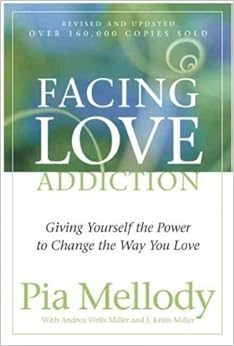
In this revised and updated version of Facing Love Addiction, bestselling author of Facing Codependence and internationally recognized dependence and addiction authority Pia Mellody unravels the intricate dynamics of unhealthy love relationships and shows us how to let go of toxic love. Through twelve-step work, exercises, and journal-keeping, Facing Love Addiction compassionately and realistically outlines the recovery process for Love Addicts, and Mellody’s fresh perspective and clear methods work to comfort and motivate all those looking to establish and maintain healthy, happy relationships.  
Facing Love Addiction ranks #8 on Amazon's best seller list of books on codependency. I have used this book in my counseling practice as a tool for clients to work through issues of codependence and love addiction. Pia's work is inspirational, thought provoking, and uplifting. It provides readers with hope for a new day.

The journal exercises allow for thorough exploration into your own addictive behaviors around relationships and love. Grammy Award winning Alanis Morisette discusses love addiction and Pia Mellody in this video

I think anyone, including celebrities, can benefit from reading this book. Take a look for yourself and let us know in the comments what your experience was with Facing Love Addiction by Pia Mellody.